
A life of presence
Even in illness, play and companionship can keep us open to life. Photo by the National Cancer Institute.
To live authentically is to accept that life is finite and uncertain, and still choose presence, love and responsibility for one another.
I remember it clearly. One day, while playing with my brother, I experienced a moment of bliss. I saw my parents, siblings and friends as a forest stretching behind me. Beyond them, all human beings, animals and plants seemed connected by bonds that reached past the physical world into something I could only experience as spiritual. The scale of it was immeasurable, yet I felt joy at being a small part of it: a seed, a young tree growing beneath their canopy. We enter the world in unequal circumstances we did not choose and remain here only briefly. We inherit life from those who came before us, and through us it continues towards those who will follow.
As a child, I understood the world mainly through perception: sight, hearing, smell, taste and touch. I knew little about life or death, while past and future remained distant abstractions. What mattered was immediate: the game before me, the people around me, the world I could see and feel. I simply wanted to play and live. Without knowing the word for it, I inhabited the present.
That childhood sense of connection deepened when I became a patient in paediatric care. In hospital, I learned about death and witnessed suffering and pain. These are difficult experiences for any child, yet the love and support of my family made them bearable and, at times, even joyful. Illness made vulnerability visible to me not as an exception, but as a condition we all share. At times, I encountered more openness to life in hospital, where vulnerability could not be hidden, than in parts of the outside world organised around concealing it. The thought that I might be seeing someone for the last time still frightened me, but it also made me grateful for having known them at all. Becoming aware of death made time feel precious and showed me how much of its meaning lies in the way we care for one another. Status and accumulation began to seem less important. Accepting mortality did not remove fear, but it helped me distinguish what mattered from what did not. Our time is borrowed; we do not know how much of it remains. When I stopped resisting that knowledge, gratitude could emerge: “I am grateful for my parents and siblings, for having known love, breathed fresh air, drunk clean water and watched the sunset’s warm light.”
The thought that I might be seeing someone for the last time still frightened me, but it also made me grateful for having known them at all.
Life remains unfathomable. To contemplate ourselves and the universe, the infinite outside us and the depths within, is a source of wonder, but also of unease. Emotions can unsettle us just when we think the last storm has passed, but they can also surprise us with joy, fulfilment and renewed affection for life. We spend our lives learning who we are, how to face our fears and how to understand and work through our insecurities. We search for meaning in a world that seems meaningless. At times, reality can feel overwhelming. Nietzsche’s image of the abyss suggests how confronting darkness can alter the person who faces it. Faced with such complexity, we may pretend to possess more certainty than we do, as though life were a play and we already knew our lines.
The knowledge that life existed before us and will continue after us can ease the fear of nothingness. Our own passage is temporary, but it belongs to a history of living beings far larger than ourselves. This recognition can awaken affection for reality: for other people, for ordinary experiences and for a world we have received but do not own. Psychotherapist Owen O’Kane argues that anxiety is sustained by our intolerance of uncertainty and that overcoming it requires moving towards uncertainty rather than avoiding it. Presence does not eliminate uncertainty or offer an escape from fear. It asks us to remain open to reality and to respond with attention, love and responsibility. It draws us towards other people rather than accumulation or self-protection alone. It can be found in caring for someone, building community, thinking critically, reading, contemplating beauty or accompanying another person in the search for meaning. These acts may seem small, but they are ways of affirming life while we are here.
Such presence is not only a private disposition. In The Human Condition, philosopher Hannah Arendt understands action as something that arises between people, within a world held in common. Our lives are shaped by social, political and economic structures that influence what choices are available, whose suffering is seen and whose voices are heard. In Una filosofía de la resistencia, philosopher Carlos Javier González Serrano adds an important warning: distress should not always be interpreted as an individual failure to adapt, for it can also be a response to conditions that demand constant availability while leaving little room for vulnerability. Presence should not be reduced to adapting ourselves to what harms us. It should help us see clearly what our own actions can change and what can only be changed together. Understanding ourselves therefore also requires examining the world that has formed us. We may not control these structures alone, but we can question them, participate in changing them and help create institutions more capable of protecting dignity and common life. This work requires flexibility, self-awareness, humility and a willingness to reconsider inherited beliefs.
Presence does not eliminate uncertainty or offer an escape from fear. It asks us to remain open to reality and to respond with attention, love and responsibility.
Complexity can provoke very different responses. We may seek refuge in pre-packaged positions, attempt to understand what resists simple answers or withdraw and wait for someone else to decide. The desire for security is not wrong; it becomes limiting when certainty is valued above freedom, inquiry or responsibility. For philosopher Jean-Paul Sartre, existence precedes essence: we are not born with a fixed nature but form ourselves through choices made within circumstances we did not choose. Our freedom is therefore neither absolute nor absent. It is situated, limited and still consequential for others. This responsibility can be uncomfortable. We often favour familiar explanations, react quickly to threats and sometimes direct blame outward rather than face our own part in a situation. Yet uncertainty also leaves the future open. For philosopher Ernst Bloch, hope is not passive reassurance but the capacity to imagine that things could be different.
When uncertainty becomes difficult to bear, distraction can offer temporary relief. We may bury ourselves in work, flood our senses with stimulation or fill every quiet moment with activity. Exhaustion then leaves little room for reflection. Like moths mistaking artificial lights for the moon, we circle distractions until we are exhausted. These responses are understandable, but they can leave the conditions that trouble us unexamined. Despair and inaction can also allow entrenched power to continue unchallenged. Action need not begin with certainty or heroism. It can begin with attention: seeing clearly, refusing indifference and remaining accountable for our response. Writer and cultural critic bell hooks observed that clarity of mind and heart allows us to know delight and engage deeply with the sensual world around us. Attention is not only vigilance against harm; it also keeps us open to joy.
Action need not begin with certainty or heroism. It can begin with attention: seeing clearly, refusing indifference and remaining accountable for our response.
Living in the present does not mean turning away from the future. It means recognising that the future is already being shaped by what we attend to, tolerate and protect today. I think of those who persist in confronting injustice and oppression, of those who work for peace, care for the people they love and defend the ecosystems on which every life depends. Their efforts remind us that speaking and acting for justice can be a form of respect: for those who came before us, for those living beside us and for those who are not yet here. There can be joy in this kind of care, provided that caring for others does not require abandoning ourselves. The effort to retain an affection for life even while confronting its difficulties recalls Nietzsche’s amor fati: not passive submission to whatever occurs, but an affirmation of life in its difficulty and incompleteness. We inherit a world shaped by other lives, and our choices help determine what kind of world others will inherit from us. Responsibility begins in that continuity. It asks us to face difficulty without sacrificing either our capacity to care or our affection for being alive.
Care does not make us immune to failure or exhaustion. Other people carry struggles we may never fully understand, and our own actions can sometimes wound them or ourselves despite our intentions. Responsibility does not require perfection; it asks us to recognise harm, accept its consequences and remain willing to repair what we can. Nor does meaningful change move in a straight line. It advances unevenly, through setbacks, uncertainty and the imperfect efforts of people who continue nevertheless. When our own world feels as though it is collapsing, love and companionship can help us recover a sense of ground. Care should not merely restore our capacity to endure unchanged conditions. At its best, it also helps us name what is harming us and recover the freedom to respond. Psychotherapist Philippa Perry reminds us that there is no shame in becoming overwhelmed. Strength is not invulnerability, but the ability to recognise our limits and meet them with help, compassion and self-compassion.
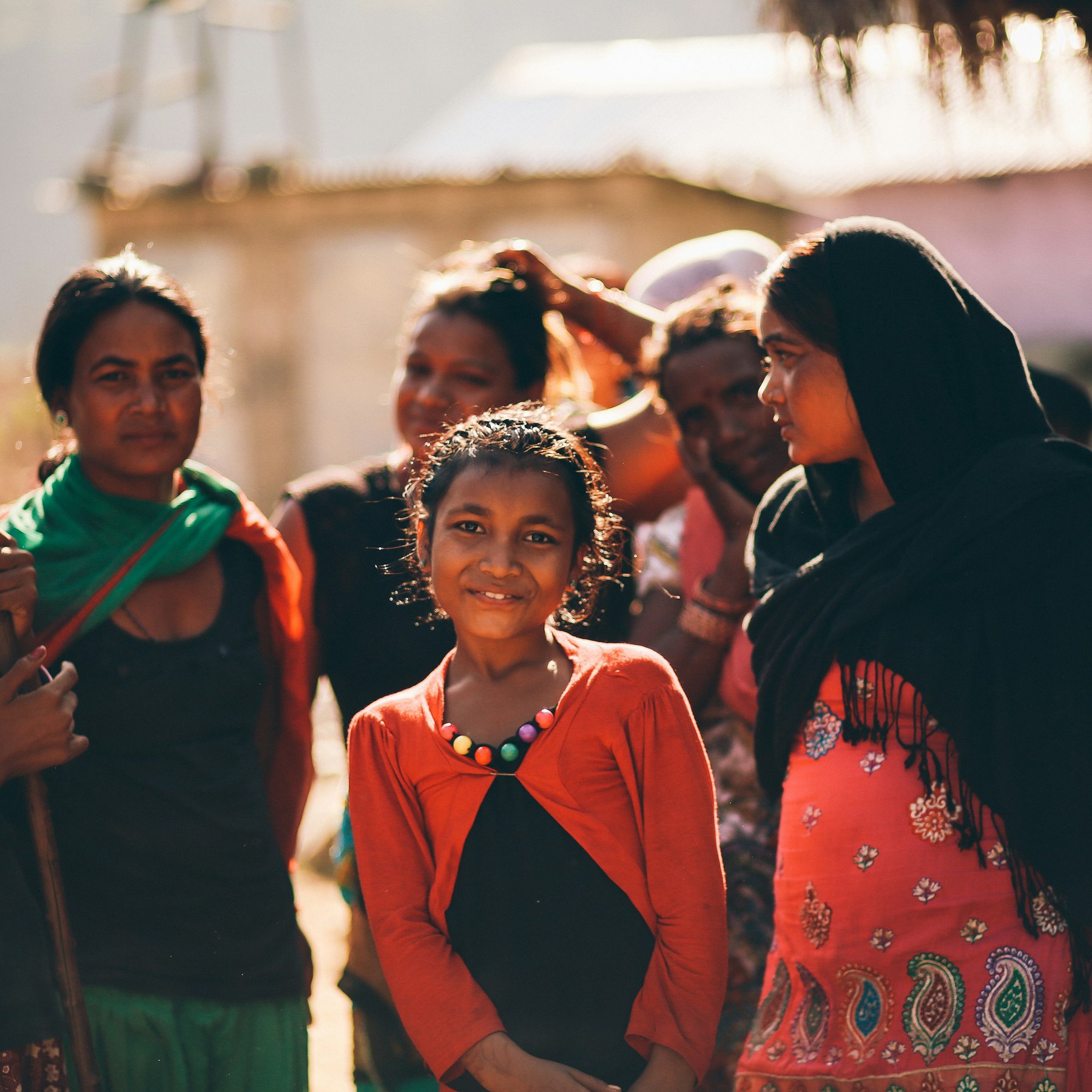
Care becomes visible when we stand beside one another. Photo by Terry Boynton.
Uncertainty is not unique to our time. In periods of instability, people in ancient Greece sought guidance from oracles and gods; today, we often place similar hopes in systems and technologies that promise prediction and control. Ancient philosophies offered a different response: not certainty, but ways of living without it. Stoicism distinguished between what lay within our power and what did not, while treating justice and responsibility towards others as essential parts of ethical life. Cynicism challenged status, convention and artificial desires; Epicureanism located freedom in simplicity, friendship and release from unnecessary wants. These traditions cannot simply be transplanted into the present, and they did not articulate our modern ideas of equality or ecological responsibility. Yet their concern with justice, restraint and common life can still help us think. The climate crisis, however, confronts us globally and through forces driven by human activity that ancient philosophy could not have anticipated. It threatens the living systems on which our lives and health depend, contributing to illness and placing greater strain on healthcare systems and the people who sustain them. It therefore asks us to extend responsibility beyond ourselves: across societies, species and generations.
Adulthood, as I understand it now, does not require leaving behind the child who questions, plays and refuses to accept injustice. At its best, it gives us the restraint and wisdom to protect that openness while respecting the vulnerability and freedom of others. Yet I have also seen how resignation can gradually present itself as realism. People who have been disappointed or exhausted may come to believe that the course of things cannot be altered. This feeling of powerlessness is understandable, especially within a culture of consumption that repeatedly suggests no alternative is possible. But resignation is not neutral: it narrows what we can imagine and leaves existing arrangements intact. Change rarely begins with a saviour, or with certainty that success is guaranteed. It begins when ordinary people question what they have been told, form their own judgements and act with others wherever they have influence. Reading, thinking and paying attention are therefore not retreats from the world. They are ways of preparing ourselves to take part in it. None of us can carry every struggle, but each of us can refuse indifference and remain available to the people and forms of life that need our care.
Presence demands continual effort: the repeated choice to return to the world as it is, to the people before us and to the responsibilities that are ours. This work requires energy and patience, but it is how we remain available to life and to one another. Sometimes presence takes the form of public action; at other times, it resides in the simplest gestures: the warmth of a caress, a hug or a kiss, or looking into someone’s eyes and saying, “I am with you.”
Presence demands continual effort: the repeated choice to return to the world as it is, to the people before us and to the responsibilities that are ours.
References
- Arendt, Hannah. The Human Condition. University of Chicago Press, 1958.
- Bloch, Ernst. The Principle of Hope. Translated by Neville Plaice, Stephen Plaice and Paul Knight. 3 vols. The MIT Press, 1986.
- González Serrano, Carlos Javier. Una filosofía de la resistencia: Pensar y actuar: contra la manipulación emocional. Ediciones Destino, 2024.
- hooks, bell. All About Love: New Visions. HarperCollins, 2000.
- Nietzsche, Friedrich. Beyond Good and Evil: Prelude to a Philosophy of the Future. Edited by Rolf-Peter Horstmann and translated by Judith Norman. Cambridge University Press, 2002. Aphorism 146.
- Nietzsche, Friedrich. The Gay Science: With a Prelude in German Rhymes and an Appendix of Songs. Edited by Bernard Williams and translated by Josefine Nauckhoff. Poems translated by Adrian Del Caro. Cambridge University Press, 2001. Aphorism 276.
- O’Kane, Owen. Addicted to Anxiety: How to Break the Habit. Penguin Random House, 2025.
- Perry, Philippa. The Book You Want Everyone You Love to Read (and Maybe a Few You Don’t). Cornerstone Press, 2023.
- Sartre, Jean-Paul. Existentialism Is a Humanism. Translated by Carol Macomber. Yale University Press, 2007. Originally published in French in 1946.